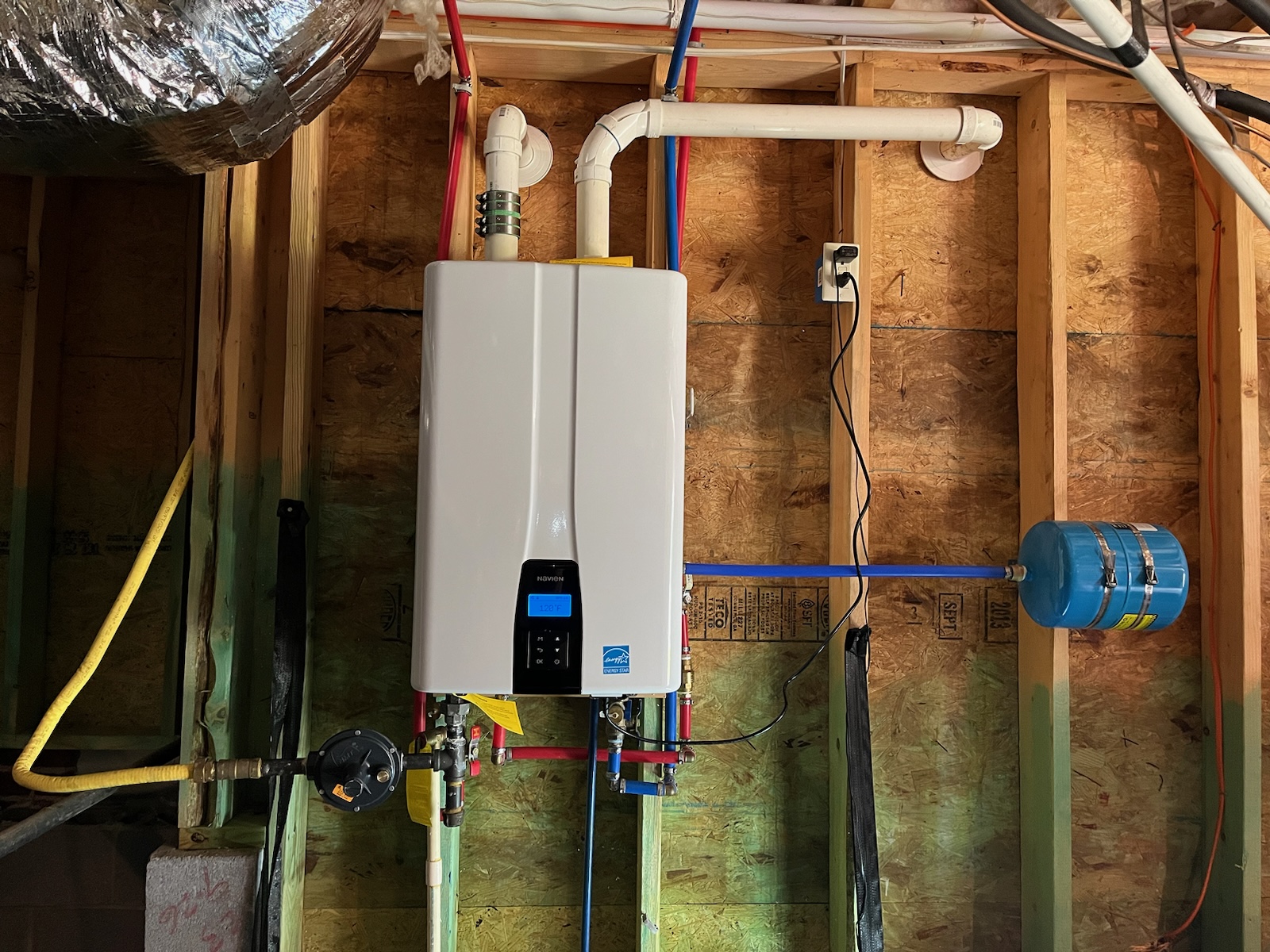
If you're replacing a water heater in Greenville, the most common question homeowners ask is:
What type of water heater is best?
The Short Answer
For most Greenville homes, a high-efficiency tank water heater or a properly sized tankless system is the best choice. Heat pump water heaters offer the highest energy efficiency, while condensing gas units work well for large households with high hot water demand. The right choice depends on your household size, energy goals, installation space, and budget.
Because water heating accounts for roughly 14–18% of your home’s energy use, choosing the right system affects both comfort and long-term utility costs.
Let’s break down your options.
Quick Comparison: Tank vs Tankless vs Heat Pump vs Condensing
| Feature |
Tank |
Tankless |
Heat Pump |
Condensing |
| Upfront Cost |
$ |
$$–$$$ |
$$–$$$ |
$$–$$$ |
| Lifespan |
8–12 years |
15–20+ years |
12–15 years |
12–15 years |
| Energy Efficiency |
Moderate |
High |
Very High |
Very High |
| Endless Hot Water |
No |
Yes |
Limited by tank |
Yes |
| Space Required |
Large footprint |
Wall-mounted |
Tall unit + airflow |
Standard tank space |
| Best For |
Budget-focused homes |
Long-term homeowners |
Energy-conscious |
Large gas households |
Traditional Tank Water Heaters: Reliable & Affordable
How They Work
Tank water heaters store 40–80 gallons of heated water, keeping it ready for use. As hot water is used, cold water refills the tank and is reheated.
Best For
- Families of 3–5
- Budget-conscious homeowners
- Homes in Taylors or Greer with standard setups
- Predictable hot water usage
Advantages
- Lowest upfront cost (typically $1,200–$2,500 installed in Greenville)
- Straightforward replacement
- Familiar technology
- Simple repairs
- Gas models may operate during certain power outages
Disadvantages
- Limited supply before recovery time
- Standby heat loss increases energy bills
- Larger footprint
- 8–12 year lifespan
For many Greenville homeowners, this remains the most practical and cost-effective solution.
Tankless Water Heaters: Energy-Efficient & Endless Hot Water
Also known as on-demand systems, tankless units heat water only when needed.
How They Work
Cold water passes through a heat exchanger where it is rapidly heated by gas burners or electric elements. The system shuts off when you close the tap.
Best For
- Smaller households (1–3 people)
- Long-term homeowners
- Homes with limited space
- Families tired of running out of hot water
Advantages
- 24–34% energy savings in low-use homes
- Endless hot water within flow limits
- Compact wall-mounted design
- 15–20+ year lifespan
Disadvantages
- Higher upfront investment ($3,000–$6,000+ installed locally)
- May require gas line resizing in older Greenville homes
- Annual descaling needed due to Upstate hard water
- Flow rate limits during peak usage
In many Simpsonville and newer Greenville subdivisions, tankless systems are increasingly popular for long-term efficiency.
Heat Pump Water Heaters: Maximum Efficiency
Heat pump water heaters move heat from the surrounding air into the tank rather than generating heat directly.
Best For
- Energy-conscious homeowners
- Homes with large basements or utility rooms
- Greenville’s humid subtropical climate
- Those eligible for federal rebates
Advantages
- 2–4x more efficient than standard electric
- Lower operating costs
- May qualify for federal tax credits
- Helps dehumidify installation area
Disadvantages
- Taller units requiring airflow space
- Compressor noise
- Slower recovery compared to gas
Because Greenville stays relatively warm most of the year, heat pump models perform especially well here.
Condensing Gas Water Heaters: High Output & Efficiency
Condensing units capture exhaust heat that traditional gas heaters waste.
Best For
- Larger families (55+ gallons daily usage)
- Homes with natural gas
- High simultaneous demand
Advantages
- Efficiency up to 95–98%
- Strong recovery rate
- Lower gas consumption
Disadvantages
- Higher cost
- Requires condensate drainage
- Specialized installation
Greenville-Specific Considerations
Hard Water
Greenville has moderately hard water. Sediment buildup affects:
- Tank heaters (flush annually)
- Tankless systems (annual descaling is essential)
- Anode rods in traditional tanks
Maintenance matters more here than in softer water regions.
Older Homes
Many older Greenville homes:
- Have ¾-inch gas lines
- Limited electrical capacity
- Crawlspace installations
Upgrading to tankless may require infrastructure upgrades.
Space Constraints
- Historic Greenville homes → tight utility closets
- Suburban Simpsonville homes → larger garages
- Travelers Rest homes → varied layouts
Space often determines feasibility.
What Does Water Heater Installation Cost in Greenville, SC?
Typical installed ranges:
- Tank replacement: $1,200 – $2,500+
- Tankless installation: $3,000 – $6,000+
- Heat pump models: $2,500 – $5,000+
- Condensing gas units: $2,500 – $5,000+
Costs may include:
- Permit fees (Greenville County typically requires one)
- Disposal of old unit
- Electrical upgrades
- Gas line modifications
- Venting adjustments
For exact pricing, visit:
https://www.plumbingheroes.com/services/water-heater-services
So What’s Actually Best for Most Greenville Homes?
Here’s the honest breakdown:
Choose Tank if:
- You want the lowest upfront cost
- You’re selling soon
- You prefer simple, reliable systems
Choose Tankless if:
- You plan to stay long-term
- You want endless hot water
- You value efficiency and space savings
Choose Heat Pump if:
- You want maximum efficiency
- You qualify for rebates
- You have installation space
Choose Condensing if:
- You use large volumes of hot water
- You have natural gas
- You want strong performance + efficiency
Does a Tankless Water Heater Add Home Value in Greenville?
In many cases, yes.
Buyers increasingly view tankless systems as:
- Modern
- Energy-efficient
- Desirable upgrades
While ROI varies, tankless units can improve buyer perception — especially in mid-to-high price ranges in Greenville and Greer.
Frequently Asked Questions
How long do water heaters last in Greenville?
Tank: 8–12 years
Tankless: 15–20+ years
Heat pump: 12–15 years
Maintenance is critical due to mineral buildup.
What size water heater does a family of four need?
Typically 40–50 gallons for tank systems, or a properly sized tankless unit based on flow rate.
Are tankless water heaters worth it?
If you plan to stay in your home 10+ years, yes — especially for energy savings and lifespan.
Do I need a permit in Greenville?
Most installations require a permit. Licensed plumbers typically handle this.
Need Help Choosing? Plumbing Heroes Can Help.
Choosing the right water heater isn’t just about specs — it’s about your home, usage patterns, and long-term goals.
Plumbing Heroes provides honest water heater consultations for homeowners in:
If you’re unsure which system fits your home, we’ll walk you through your options without pressure.
Visit:
https://www.plumbingheroes.com/services/water-heater-services
Or call Plumbing Heroes to schedule an evaluation today.