Should I Repair or Replace My Water Heater?
Should I Repair or Replace My Water Heater? Blurb: Your water heater is acting up. Before you spend money on a repair — or rush into a replacement — here's how to figure out which one actually makes sense.
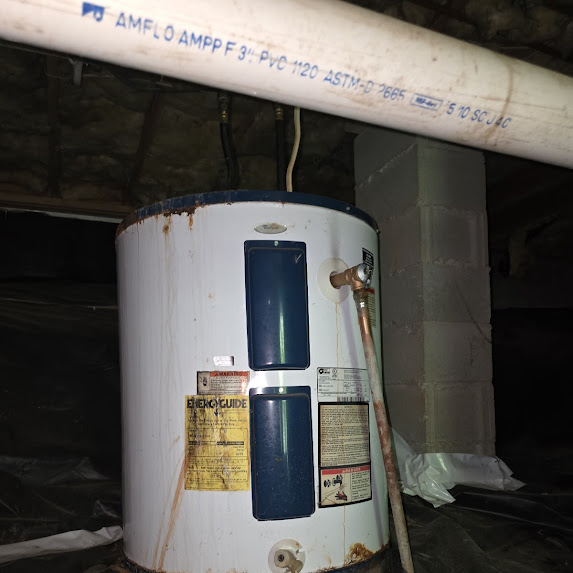
Should I Repair or Replace My Water Heater? Blurb: Your water heater is acting up. Before you spend money on a repair — or rush into a replacement — here's how to figure out which one actually makes sense.
TL;DR: If your water heater is under 8 years old and the repair is minor — thermostat, heating element, anode rod — repair it. If it's over 10, leaking from the tank, or the repair costs more than half the price of a new unit, replace it. Everything in between depends on the specifics. This guide gives you the framework to decide.
Your water heater is giving you trouble. Maybe it's not heating like it used to. Maybe you heard a noise that didn't sound right. Maybe your plumber just quoted you a number and now you're standing in the garage trying to decide: is it worth fixing, or should I just get a new one?
This is one of the most common questions we get from homeowners across Greenville, and the honest answer is that it depends on a handful of specific factors. Not your neighbor's opinion. Not a rule that applies to every situation. The actual age, condition, and repair cost of your unit.
Here's how to think through it.
Every repair-or-replace decision comes down to three things:
1. How old is the unit? 2. What's actually wrong with it? 3. How much will the repair cost relative to a new water heater?
If you can answer those three questions, you can make a confident decision. Let's take them one at a time.
The age of your water heater is the single biggest factor in this decision. Standard tank water heaters last 8 to 12 years. Tankless units last 15 to 20 years. Where your unit falls in that range changes the math on every repair.
Under 8 years old: Repair almost always makes sense. You've got years of service life remaining, and most repairs at this stage are component-level fixes — a thermostat, a heating element, an anode rod. These are maintenance items, not signs of system failure.
8 to 10 years old: This is the gray zone. A minor repair is still worth doing if the tank is in good shape and hasn't shown other warning signs. But a major repair — $500 or more — starts to look questionable when the unit may only have a couple of years left.
Over 10 years old: Lean toward replacement unless the repair is genuinely minor (under $200) and the unit is otherwise performing well. Every dollar you put into a unit past its expected lifespan is a gamble on how much longer it will last.
Not sure how old it is? Check the manufacturer's label on the side of the tank. The serial number usually encodes the manufacture date — the first two or three characters represent the month and year. If the label is gone, your plumber can help you decode it.
(Related: Signs Your Water Heater Needs Replacing)
Not all water heater problems are created equal. Some are routine maintenance. Others are terminal. Here's how to think about the most common issues:
These are component-level fixes that restore function without touching the tank itself. If the unit is under 10 years old and the tank is sound, these are worth doing every time.
Thermostat replacement: The thermostat controls when the heating element or burner fires. When it fails, you get inconsistent temperatures or no hot water at all. A straightforward fix. Typical cost: $150 to $300 installed.
Heating element replacement (electric): Electric water heaters use upper and lower elements. When one burns out, you lose hot water or it runs out fast. This is one of the most common electric water heater repairs. Typical cost: $150 to $350 installed.
Thermocouple replacement (gas): The thermocouple is the safety sensor that keeps the gas valve open when the pilot light is burning. When it fails, the pilot won't stay lit. Simple, inexpensive repair. Typical cost: $100 to $300 installed.
Anode rod replacement: The anode rod is the sacrificial metal rod that corrodes so your tank doesn't. Replacing it on schedule is one of the best things you can do to extend the life of your water heater. Typical cost: $150 to $300 installed.
Pressure relief valve replacement: The T&P valve is a safety device. If it's dripping or won't seat properly, it needs to be replaced. Easy fix. Typical cost: $100 to $250 installed.
Sediment flush: Draining and flushing the tank to remove accumulated sediment. This is maintenance, not really a repair — but it solves a lot of performance issues. Typical cost: $100 to $250.
(Related: How Often Should You Flush Your Water Heater?)
These repairs are more expensive and may signal deeper issues — especially on older units.
Gas control valve replacement: The gas valve regulates gas flow to the burner. When it fails, the burner won't fire. The part and labor can run $300 to $600 installed. On a unit under 8 years old, it's worth doing. On a 10-year-old unit, that money might be better spent on a new water heater.
Dip tube replacement: The dip tube directs cold water to the bottom of the tank for heating. When it cracks or breaks, cold water mixes with hot at the top of the tank and you get lukewarm water from every faucet. The repair itself isn't terribly expensive ($150 to $300 installed), but a broken dip tube on an older unit is often a sign that other components are aging too.
Multiple repairs at once: If your plumber is quoting you for two or three things — a thermostat and an element and an anode rod — the combined cost can quickly approach replacement territory. One repair is maintenance. Three repairs on the same visit is a unit telling you it's done.
Some problems mean the water heater is finished, regardless of age:
Tank leak. Water coming from the tank itself (not from fittings, valves, or connections) means the tank wall has corroded or cracked. There is no repair for a leaking tank. It needs to be replaced — and quickly, before the leak becomes a flood.
Extensive corrosion. Rust on external pipes or fittings can sometimes be addressed. Corrosion on the tank body or heavy rust in the hot water itself means the interior lining has failed. The anode rod can no longer protect a tank that's already corroding from the inside.
(Related: Why Is My Water Heater Not Producing Hot Water?)
Here's the practical framework:
If the repair costs more than 50% of the price of a new water heater, replace it.
In the Greenville market, a standard 40- to 50-gallon tank water heater runs $800 to $2,500 installed. That means your 50% threshold is roughly $400 to $1,250, depending on what you'd be replacing it with.
A $200 thermostat repair on a 7-year-old unit? Easy repair. A $600 gas control valve on a 10-year-old unit with rising energy bills? That's replacement territory.
The 50% rule is a solid starting point, but adjust the threshold based on age:
Here's a mistake homeowners make: spending $300 on one repair, then $250 on another six months later, then $400 on another the following year. Each repair seemed reasonable on its own, but you just spent $950 on a unit that ended up failing anyway.
If you've already repaired your water heater once in the past 12 months and it's acting up again, that pattern is telling you something. The second trip is the one where you should seriously consider replacement.
When a plumber comes out to assess your water heater, they should give you three things:
1. An honest diagnosis. What's actually wrong — not just a vague "it's old." You deserve to know which component failed and why.
2. The repair cost AND the replacement cost. A plumber who only quotes you the more expensive option isn't giving you the full picture. You should see both numbers side by side so you can make an informed decision.
3. Their honest recommendation — with reasoning. A good plumber will tell you whether they'd repair or replace if it were their own home, and explain why. If they can't or won't explain the reasoning, that's a red flag.
You should never feel pressured into a replacement when a repair makes sense, and you shouldn't be sold a band-aid repair when the unit clearly needs to go.
Q: How much does it cost to repair a water heater in Greenville, SC? A: Most common repairs — thermostat, heating element, anode rod, pressure relief valve — run between $100 and $350 installed. More involved repairs like a gas control valve can reach $500 to $600. If the total repair quote exceeds half the cost of a new unit, replacement is usually the better investment.
Q: Is it worth repairing a 12-year-old water heater? A: Rarely. A 12-year-old tank water heater has already exceeded the typical 8- to 12-year lifespan. Even a successful repair is buying you limited time on a unit that could fail in other ways soon. Unless the repair is under $200 and the tank shows no other warning signs, replacement is almost always the smarter move.
Q: How do I know if my water heater tank is leaking? A: Check for water pooling around the base of the unit. If the water is coming from a fitting, valve, or pipe connection, it may be repairable. If it's coming from the tank body itself — seeping through the outer shell — that's internal corrosion and the tank needs to be replaced. There's no fix for a cracked or corroded tank.
Q: Should I replace my water heater before it fails? A: If your unit is over 10 years old and showing warning signs — rising energy bills, inconsistent hot water, rust in the water, frequent repairs — yes. A planned replacement lets you compare options, shop for the right unit, and schedule the install at your convenience. An emergency replacement after a failure means rush pricing, fewer choices, and potential water damage. (Related: Signs Your Water Heater Needs Replacing)
Q: Should I upgrade to a tankless water heater when I replace? A: It depends on your household, budget, and home infrastructure. Tankless systems cost more upfront but last longer and use less energy. Tank water heaters cost less and are simpler to install. There's no universal right answer — it depends on your situation. (Related: Tankless vs. Tank Water Heaters: Which One Makes Sense for Your Greenville Home?)
The repair-or-replace decision doesn't have to be a guessing game. A quick assessment from a licensed plumber can give you the information you need — the age, the diagnosis, and the real costs — to make the call with confidence.
Plumbing Heroes serves homeowners across Greenville, Taylors, Greer, Simpsonville, Mauldin, and Travelers Rest. We repair and replace water heaters every week, and we'll always give you both options with honest pricing. If a $150 repair buys you five more years, we'll tell you that. If the unit needs to go, we'll tell you that too.
Call us at (864) 313-1289 or schedule an assessment online.
Whether you’re dealing with an urgent plumbing issue or planning improvements for your home, our team is ready to help. Upstate homeowners trust Plumbing Heroes for dependable service, clear communication, and work that stands the test of time.